


Stay up to date on the latest digital marketing topics.
News & Trends
Beyond Four Walls: Innovative Assisted Living Design for Thriving Residents
Why Assisted Living Design Matters More Than Ever
Assisted living design is shifting from institutional models to hospitality-inspired environments that prioritize resident dignity, independence, and quality of life. With the global population over 60 expected to reach 2.1 billion by 2050, the design of these communities directly impacts physical health, cognitive function, and overall well-being.
Key trends shaping modern assisted living design include:
- Resident-centered, home-like environments
- Small household models (10-15 residents)
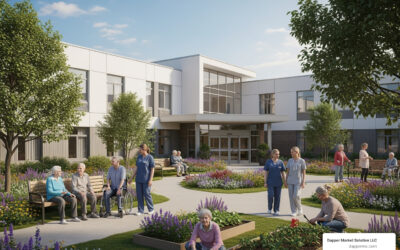
- Biophilic design with access to nature
- Smart technology for safety and independence
- Universal design principles for aging in place
- Post-COVID innovations like advanced HVAC and touchless tech
- Hospitality-inspired amenities (fitness centers, cafes)
- Urban locations with walkable access to community life
This evolution reflects a new perspective on aging. Design is no longer just about clinical efficiency; it’s about creating environments where older adults can thrive. Research confirms that thoughtful design can reduce stress, improve mobility, and combat social isolation.
As Deepak Dashairya, founder of Dapper Market Solutions, I’ve seen how aligning physical spaces with strategic marketing attracts the right residents. Understanding assisted living design is essential for differentiating a facility in a competitive market. Successful communities offer more than care—they offer a lifestyle that residents and their families actively choose.
The Evolution of Senior Living: From Institution to Inspiration
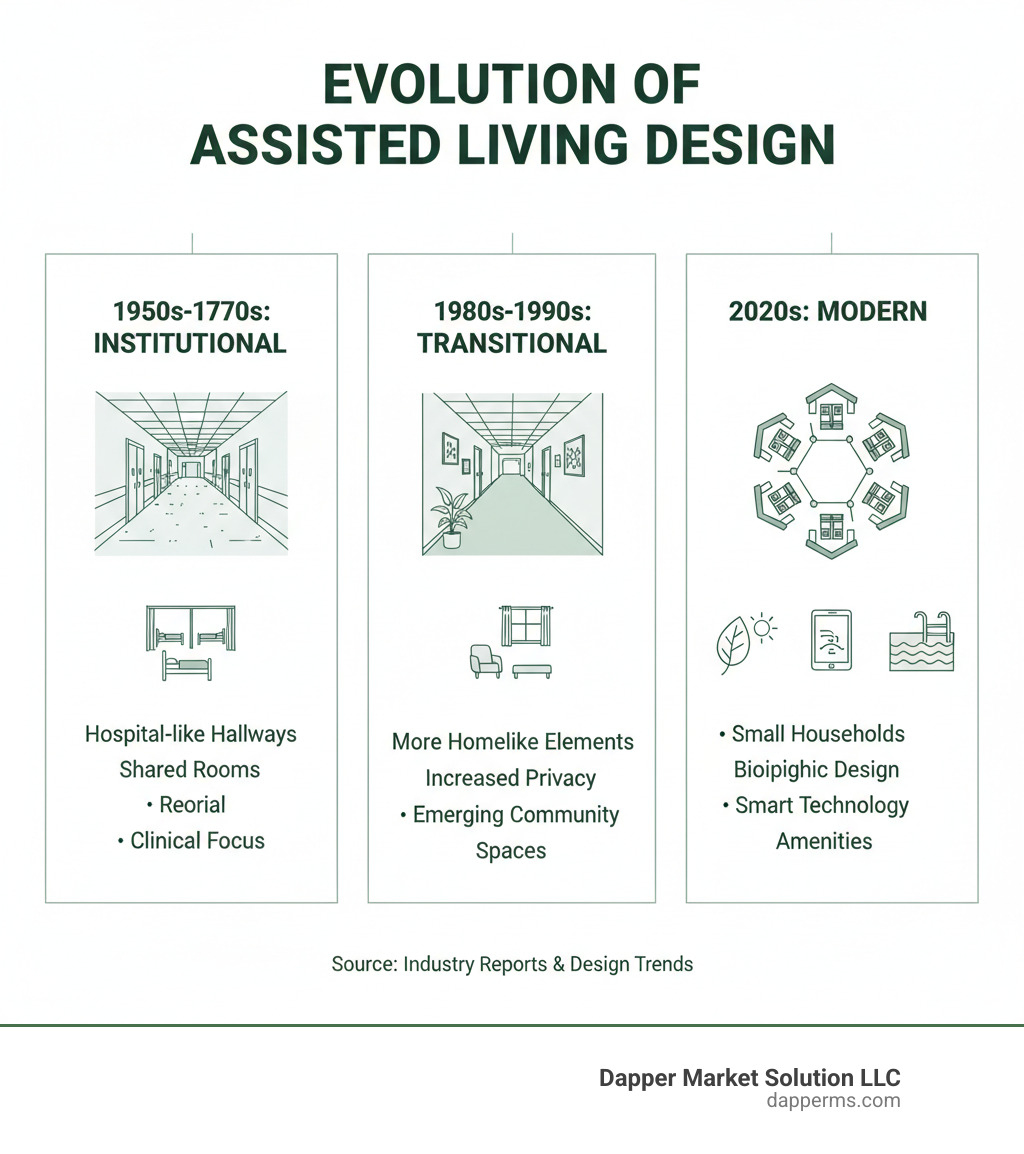
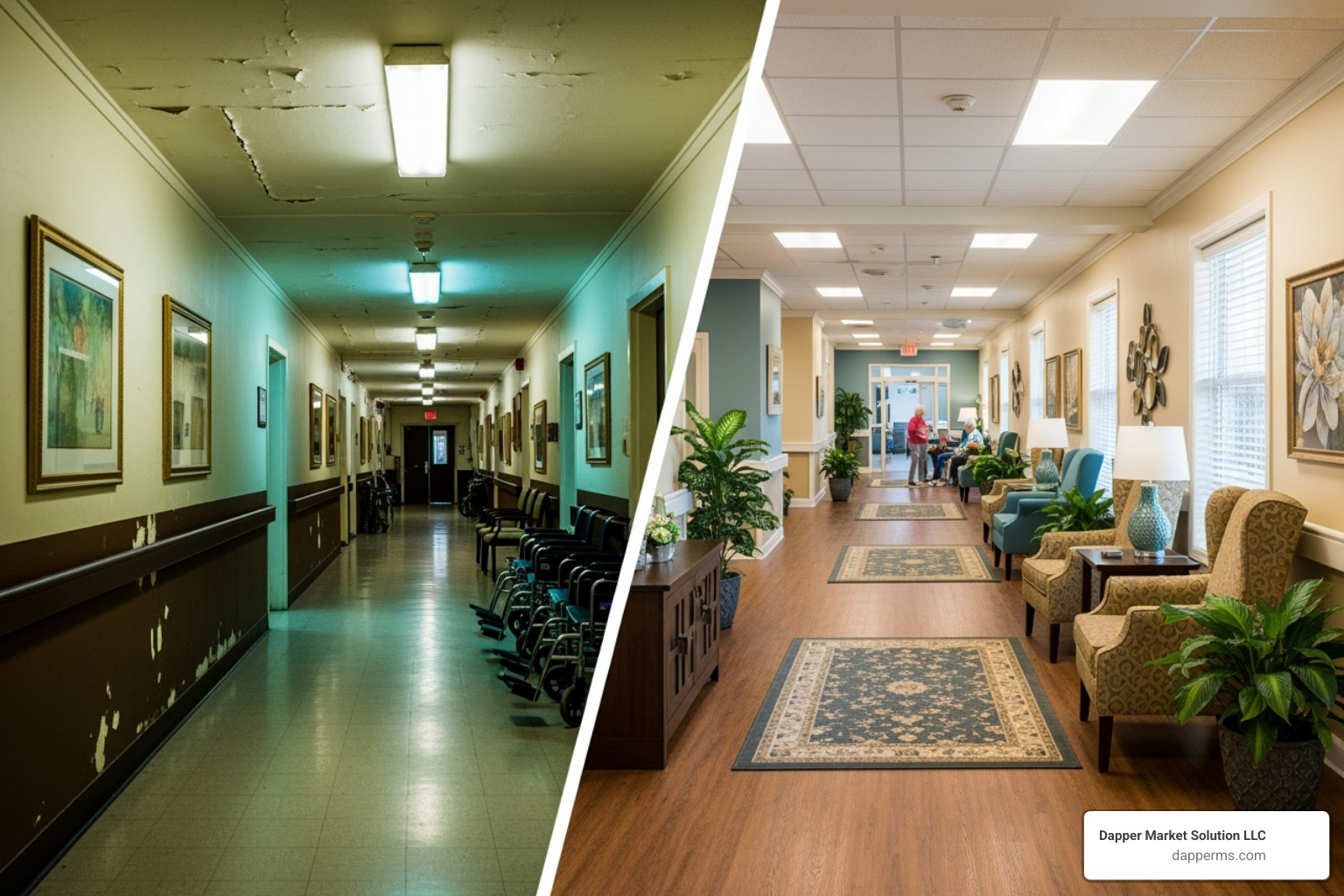
The history of senior living design reflects a shift from institutional necessity to inspirational choice. Early care models like almshouses provided basic shelter, but the 20th century saw the rise of hospital-like facilities focused on clinical efficiency. These sterile environments, with wide hallways and centralized nursing stations, often limited independence and inadvertently hastened decline.
A cultural shift rejected the idea that aging means giving up joy and purpose. This, combined with research on environmental health, sparked a revolution in assisted living design. The concept of assisted living created a middle ground between independent living and skilled nursing, opening new design possibilities for environments that feel like home. Today’s best designs draw inspiration from boutique hotels, supporting independence and social connection while keeping help nearby. This evolution is also seen globally, with Japan’s focus on “aging in place” and China’s elder universities offering different models for honoring seniors.
Designing for a New Generation: The Baby Boomer Effect
Baby Boomers (born 1946-1964) are demanding that assisted living design evolve with their expectations. This generation values personal choice, active lifestyles, and lifelong learning. They view retirement as a new chapter, not a time to slow down.
In response, communities are incorporating resort-like amenities. Fitness centers, spas, movie theaters, art studios, and restaurant-style dining are becoming standard. Location is also key, with a shift toward urban locations offering walkable access to cultural events and shops. This trend includes intergenerational living models, creating vibrant communities that mix seniors with younger families or students.
At Dapper Marketing Solutions, we help communities showcase these modern amenities. Our work in Proven Senior Living Marketing Strategies That Drive Results explores how to effectively communicate what makes your community different.
Post-COVID Considerations in Assisted Living Design
The pandemic embedded new safety standards into assisted living design without sacrificing quality of life. Key adaptations include:
- The neighborhood or small house model: Smaller, self-contained households of 10-15 residents improve infection control by allowing for targeted containment without isolating everyone.
- Advanced technology: Advanced HVAC systems with HEPA filtration, UV light sanitation, and touchless technologies (automatic doors, voice controls) are now common to reduce transmission risks.
- Emphasis on outdoor access: Well-designed courtyards, gardens, and walking paths became essential for safe socialization and mental well-being.
- Flexible spaces: Multi-purpose rooms with movable walls and adaptable layouts allow communities to respond to changing health guidelines without major renovations.
As detailed in How MemoryLaneHome.com Transformed Their Strategy, communities that adapted quickly have set new standards for what residents and families expect.
Core Principles of Modern Assisted Living Design
The best assisted living design is person-centered, an approach we call “designing from the inside out.” It begins by understanding how residents want to live, creating spaces that celebrate their abilities and honor their identity.
This philosophy balances safety with autonomy. Safety features are integrated discreetly, so a handrail becomes an architectural detail and motion-sensor lighting provides ambiance. The goal is to create “memorable experiences” by weaving the community’s brand and operations into physical spaces that support a desired lifestyle. A boutique hotel-style lobby or a restaurant-quality dining room helps residents feel they are living a life they are proud of, not just residing in a facility.
Fostering Community and Active Engagement
Loneliness can be as detrimental to health as smoking, which is why modern assisted living design focuses on creating spaces for natural connection. Instead of sterile rooms, communities need comfortable, inviting areas that encourage spontaneous interaction.
Key design elements for community building include:
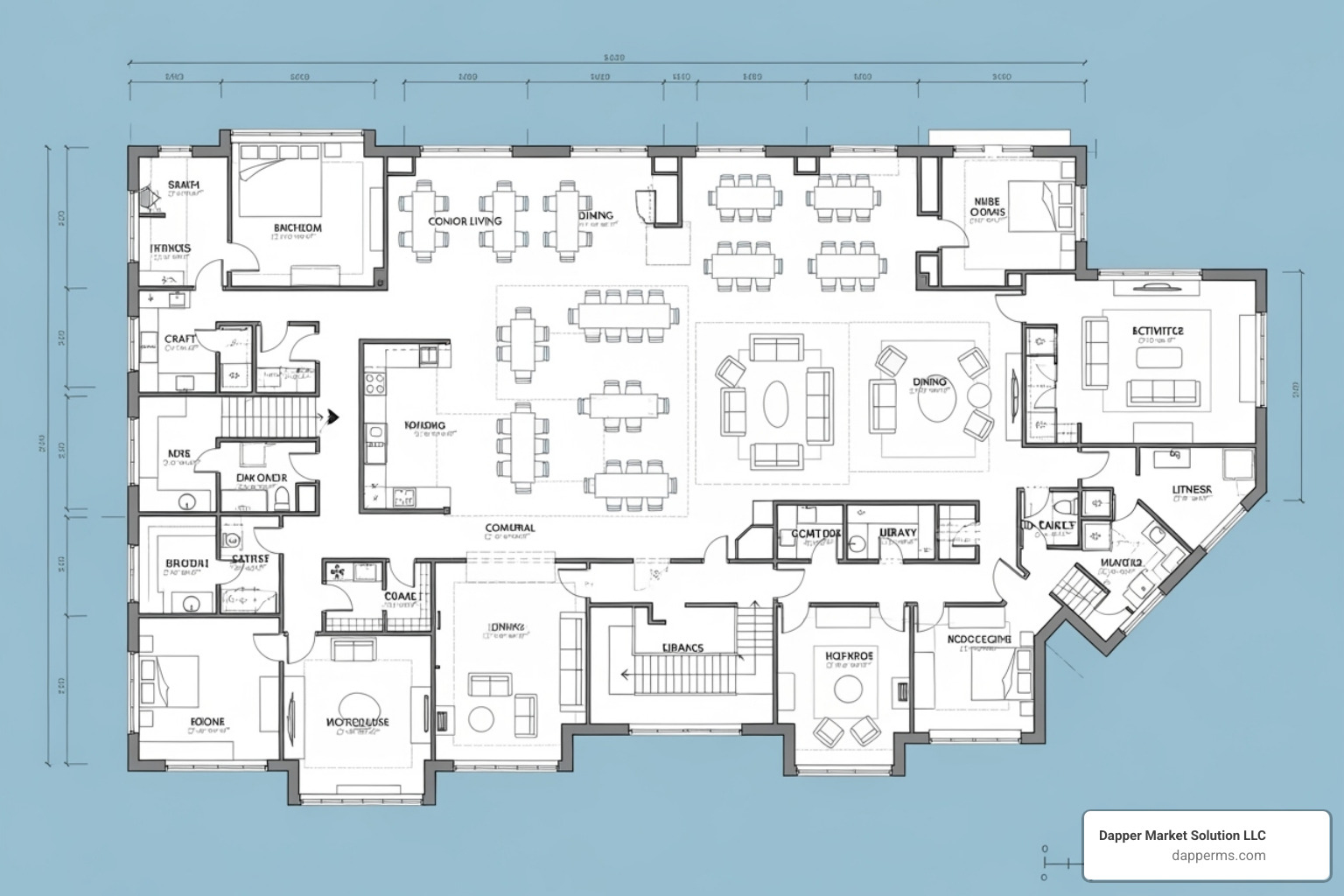
- Inviting central gathering spaces with comfortable seating.
- Interactive kitchen and dining areas where residents can participate or socialize.
- Flexible multi-purpose rooms for activities like yoga, art, or movie nights.
- Accessible outdoor patios and courtyards for fresh-air socializing.
- Small group activity zones like libraries, game rooms, or art studios for shared hobbies.
These spaces, designed with natural light and appealing furniture, become hubs where friendships form and isolation is kept at bay.
Designing for Health, Wellness, and Nature
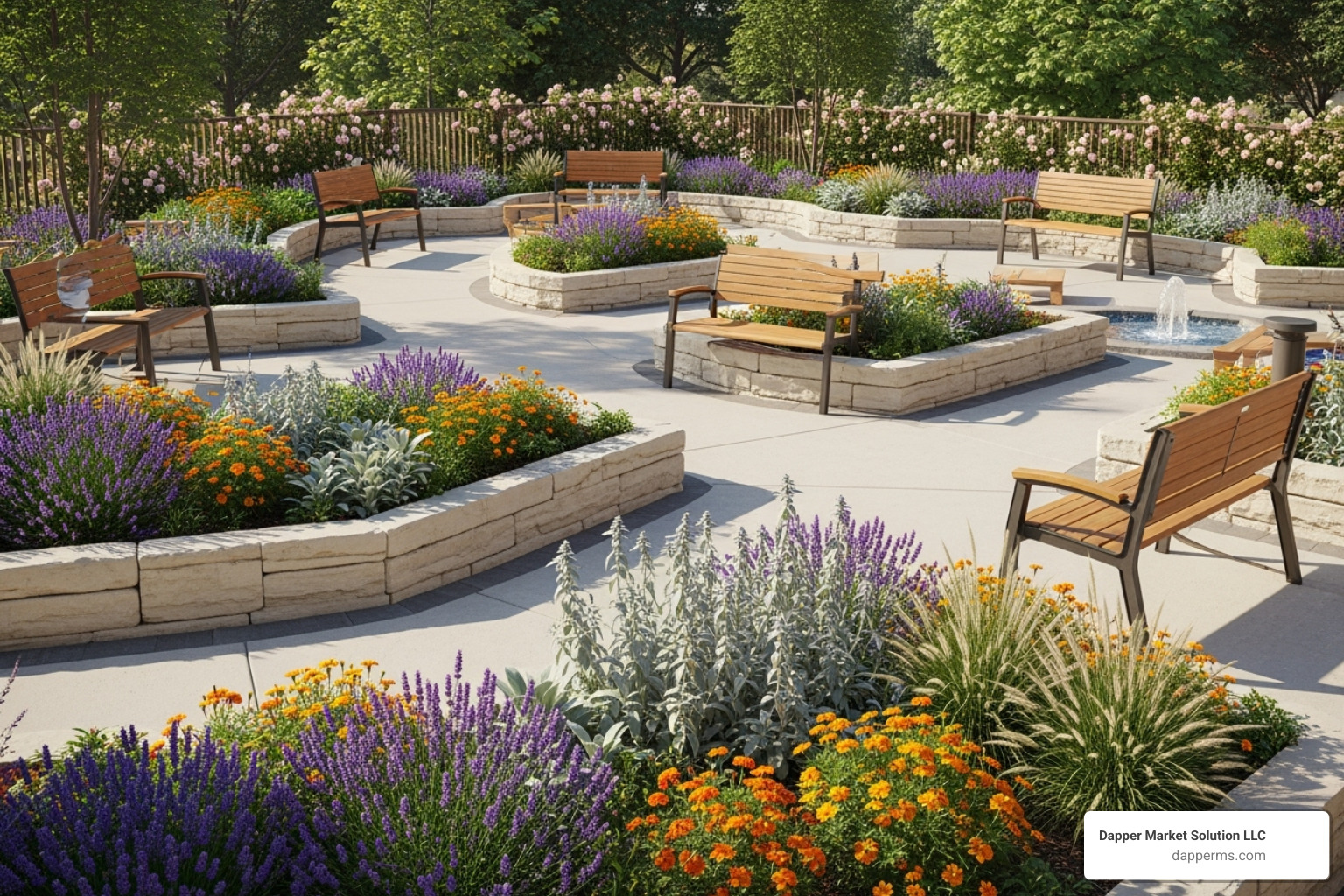
Access to nature provides measurable health benefits for older adults, including lower blood pressure and reduced anxiety, as confirmed by research like this study on nature’s health benefits for older adults. Biophilic design is therefore a core principle of assisted living design. This involves creating genuine connections to the natural world through abundant natural light, views of green spaces, and the use of organic materials like wood and stone.
Accessible outdoor spaces like courtyards, therapeutic gardens, and walking paths are essential for physical activity and safe social interaction. For residents with cognitive impairments, sensory design in purpose-built rooms can use sound, texture, and light to provide calming or engaging stimulation.
Thoughtful lighting, especially systems that mimic natural circadian rhythms, improves sleep and daytime alertness. Environments are also designed to encourage safe movement with well-lit hallways, intuitive pathways, and strategically placed seating.
Empowering Residents with Technology and Personalization
In assisted living design, technology should be invisible, empowering residents with control and independence.
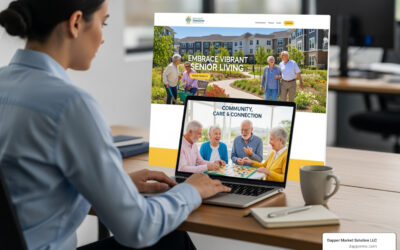
Smart home features like voice-activated controls for lighting and temperature extend independence for those with mobility or vision challenges. Health monitoring systems, such as wearable devices and fall detection sensors, provide peace of mind by alerting staff to emergencies without being intrusive. For operators, AI and smart systems can optimize staffing and streamline administrative tasks, allowing caregivers to focus on residents. Our team at Dapper Marketing Solutions specializes in Senior Living Web Design & Development to help integrate these solutions.
Personalization is key. Customizable finishes and encouraging residents to bring their own furniture and artwork allow them to make a space their own. These choices are fundamental to changing a facility into a home.
Prioritizing Dignity, Privacy, and Accessibility
Dignity in assisted living design is paramount, which is why apartment-style living is the gold standard. Private bedrooms, en-suite bathrooms, and kitchenettes provide the autonomy of home, allowing residents to control their own space and social interactions.
A clear separation between public and private care areas ensures personal care happens discreetly. En-suite bathrooms with features like roll-in showers and stylish grab bars provide accessibility while maintaining privacy.
Universal design principles ensure spaces work for everyone, regardless of ability. This includes wide doorways, non-slip flooring, and ample lighting that benefit all residents without feeling institutional. For those with cognitive impairments, design strategies like clear wayfinding cues (color-coding, landmarks) and uncluttered layouts reduce confusion and support independence, as outlined in resources like the Seniors Housing Design Guide. This approach creates a dynamic, respectful environment where residents feel a true sense of ownership.
Future-Proofing Senior Living: Challenges and Opportunities
The future of assisted living design involves navigating key challenges with innovative solutions.
A primary challenge is affordability. As demand for high-quality, hospitality-inspired environments grows, the industry must find ways to deliver dignity and comfort without excluding seniors on fixed incomes. This requires creative construction methods, cost-effective materials, and efficient operational models.
Sustainability is now an essential component. Modern assisted living design incorporates energy-efficient systems like solar panels, low-carbon materials, and passive design strategies that maximize natural light and airflow. These choices create healthier living environments and reduce long-term operational costs.
Design also offers solutions to the staffing crisis. Thoughtful facility layouts with efficient workflows, comfortable staff lounges, and dedicated break areas can reduce caregiver burnout. Supporting staff well-being leads to better retention and a higher quality of care for residents.
The communities that thrive will be those that view design not as an expense but as a crucial investment in the well-being of both residents and staff. For more insights on this intersection, explore our comprehensive Senior Living page.
Frequently Asked Questions about Assisted Living Design
How does design impact staff retention and burnout?
Thoughtful assisted living design directly combats caregiver burnout and improves staff retention. Efficient layouts and streamlined workflows reduce physical strain and time spent searching for supplies, allowing staff to focus more on resident care. Well-lit, organized spaces and dedicated staff lounges provide comfortable areas to decompress and recharge. By designing environments that support caregiver well-being, facilities can increase job satisfaction, reduce turnover, and ultimately provide a higher quality of care for residents.
What is the ‘small household’ model in senior living?
The ‘small household’ model is a shift in assisted living design away from large, institutional floors. It creates intimate, self-contained living units for 10 to 15 residents. Each household has private bedrooms and bathrooms, but residents share a common living room, kitchen, and dining area. This fosters a strong sense of belonging and allows for more personalized care. The model also offers practical benefits like improved infection control and a less confusing environment for residents with cognitive impairments.
How can design balance safety with a non-institutional feel?
The key to balancing safety and a non-institutional feel in assisted living design is to integrate safety features discreetly. For example, using stylish grab bars that also function as towel racks, or installing slip-resistant flooring that mimics high-end materials like hardwood. Ample lighting, clear pathways, and universal design principles (like wide doorways) improve safety without a clinical look. Providing private, apartment-style living spaces further reinforces a sense of home, ensuring residents feel secure and dignified, not institutionalized.
Conclusion
The evolution of assisted living design reflects a fundamental shift in our perspective on aging—from managing decline to creating environments where older adults can thrive. Today’s hospitality-inspired communities prioritize dignity, independence, and quality of life, a stark contrast to the institutional facilities of the past.
As we’ve explored, design profoundly shapes the resident experience. Person-centered principles, biophilic elements, smart technology, and universal design are no longer ideals but practical strategies for building vibrant communities. These approaches create spaces where friendships flourish, independence is maintained, and residents live with purpose.
While challenges like affordability and sustainability remain, the opportunities are immense. Thoughtful assisted living design is not just an investment in resident well-being; it’s a powerful competitive advantage. When your physical environment authentically reflects your commitment to excellence, your marketing story becomes compelling and genuine.
At Dapper Marketing Solutions, we understand that strategic design and marketing must work together. A beautiful, resident-centered community needs strategic outreach to connect with families, and powerful marketing requires an exceptional experience to back it up.
We’re here to help you align both. Learn how strategic design and marketing can elevate your healthcare facility and create a community where seniors don’t just live—they thrive.
Explore More From DMS

The Team, The Team, The Team!