
Stay up to date on the latest digital marketing topics.
News & Trends
Beyond the Band-Aid: Crafting an Allied Health Website That Heals Your Business
Why Allied Health Practices Need More Than Just a Website
Allied health website design is the strategic process of creating a professional, patient-focused online presence for providers like physiotherapists, occupational therapists, and psychologists. An effective design includes:
Key Elements of Allied Health Website Design:
- Regulatory-compliant content that meets industry guidelines
- Mobile-responsive design for all devices
- Online booking request forms for 24/7 accessibility
- Local SEO optimization to appear in local search results
- Patient-focused content that builds trust
- Fast loading speeds for a better user experience
- Professional branding that reflects your practice culture
You’re competing in a crowded digital space. Your online presence needs to do more than exist—it needs to perform. Your website is often the first interaction a potential patient has with your practice. Research shows that over 43% of online bookings happen after hours. If your website isn’t working around the clock to build trust and make it easy to get in touch, you’re losing patients.
Most allied health websites are either DIY projects that look unprofessional or generic templates that fail to stand out. Neither approach converts visitors into booked appointments.
Your website isn’t just a digital brochure. It’s your most important marketing asset—a digital front door that works 24/7.
I’m Deepak Dashairya, and at Dapper Market Solutions, we specialize in allied health website design. We create systems that generate predictable patient inquiries while meeting strict industry compliance requirements.
Your Digital Front Door: Why a Professional Website is Non-Negotiable
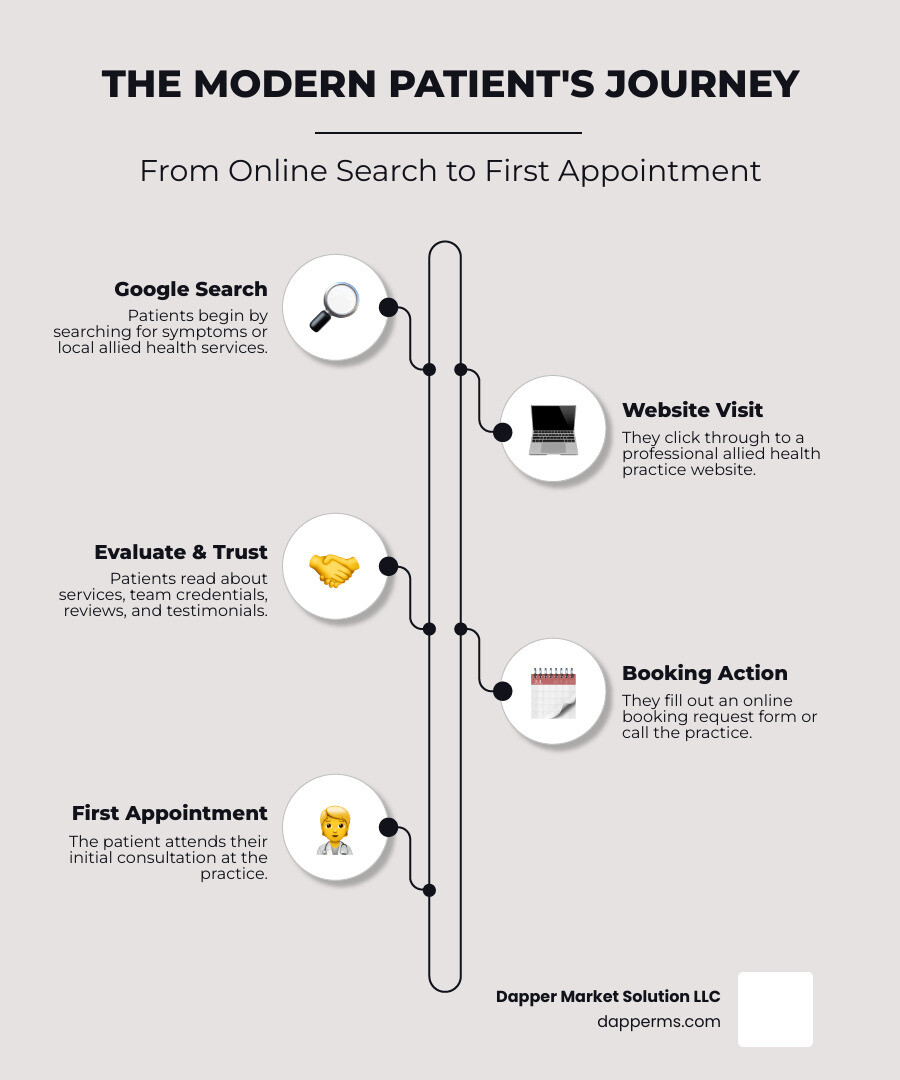
Imagine someone searching for a “physiotherapist near me” at 2 AM. Your practice appears. They click. That first digital impression determines whether they book with you or a competitor. Your website is your digital front door, working 24/7.
A surprising 43% of online bookings happen after hours. A professional website is always there, answering questions and capturing leads while your clinic is closed. Beyond accessibility, your site must build trust and credibility. A polished website signals competence, showcases your qualifications, and introduces your team, building rapport before the first visit. Without a strong online presence, you appear less trustworthy than practices that have invested in their allied health website design. In a crowded market, standing out is essential.
Ready to create a website that truly represents your practice and converts visitors into patients? Find how we approach this with Enhance Your Practice with Medical Website Design Services.
The Impact of Design on Patient Trust and Bookings
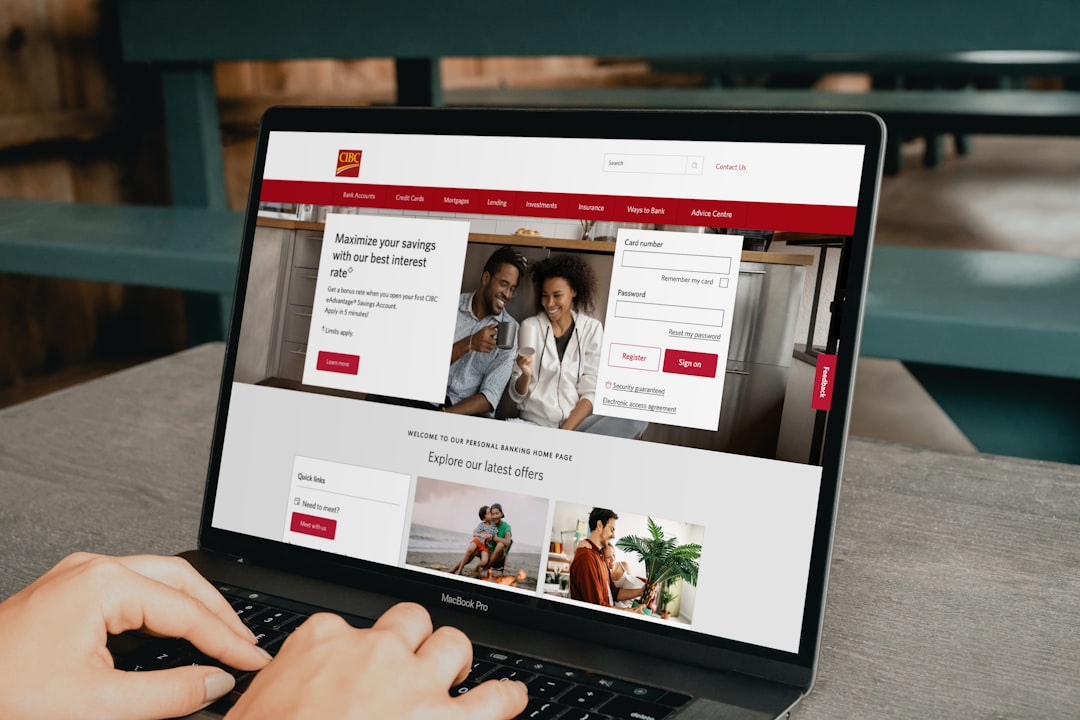
We judge healthcare practices by their websites. Visual appeal is fundamental to building trust. Professional photography of your actual clinic and team helps potential patients picture themselves there.
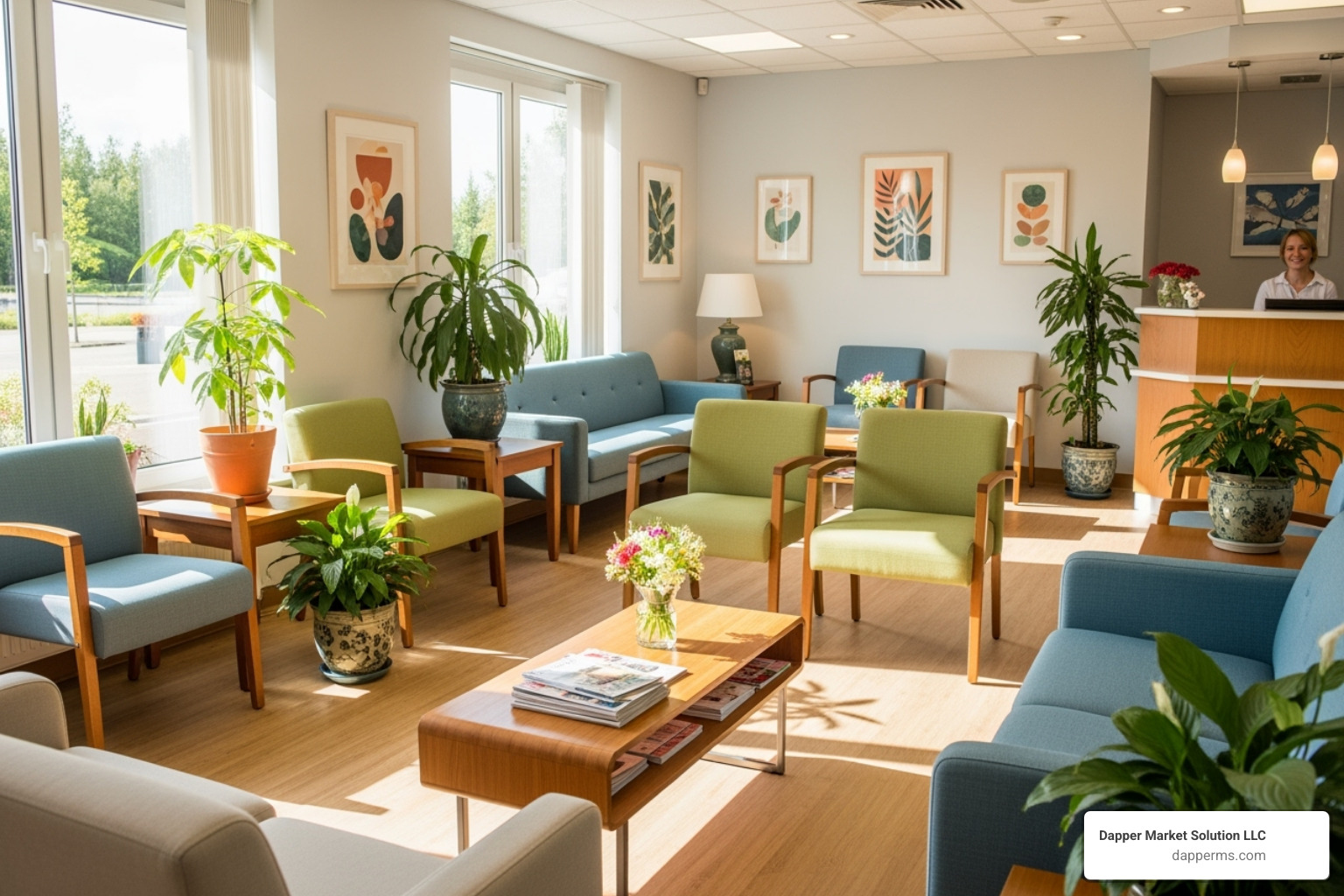
In contrast, a site with stock photos or confusing navigation suggests a lack of attention to detail. Clear navigation is crucial; if users can’t find your services or booking info, they’ll leave. A well-designed site with intuitive navigation and consistent branding builds confidence. Authentic team bios also personalize your practice, changing you from “a physiotherapist” into a specific, trusted professional. This emotional connection directly impacts conversion rates.
Differentiating Your Practice in a Crowded Market
To stand out, your website must showcase what makes your practice different. Most practices use generic descriptions. Your unique value proposition is what sets you apart. Do you specialize in a niche, like pediatric therapy or sports injuries?
Your allied health website design must communicate this clearly. Highlight your specializations and make it obvious who you serve best. Patient testimonials and case studies provide powerful social proof, but be sure to follow all regulatory guidelines. Your brand identity—colors, fonts, and tone—should consistently reflect your practice culture. These elements help attract your ideal patients.
Want to develop a comprehensive strategy that extends beyond just your website? Explore our insights on Digital Marketing Strategies for Healthcare Success.
The Anatomy of an Effective Allied Health Website
Your allied health website design should create the same sense of comfort and clarity as your physical clinic. The foundation is User Experience (UX)—making sure every visitor can easily find what they need.
Key technical elements include:
- Mobile responsiveness: Essential for users on phones and tablets. Your site must function flawlessly on every device.
- Fast loading speed: A slow site drives patients away. We optimize every element for speed to keep visitors engaged.
- Intuitive navigation: Clear menus and logical page structures help users find information without frustration.
- Inclusive design: We build websites that are accessible to everyone, including those with disabilities, demonstrating care for all potential patients.
For more detailed insights into creating engaging patient experiences, explore our blog on Effective Medical Website Design Tips for Engaging Patients.
Core Principles of Allied Health Website Design
Great design starts with understanding your patients’ needs. They are often stressed and looking for clear answers.

Our guiding principles are:
- Simplicity and clarity: We use plain language and clean layouts to make information easy to digest.
- Empathy in design: We choose welcoming imagery and a supportive tone to put patients at ease.
- Patient-centric approach: Every design decision is made to serve the visitor, ensuring a seamless experience.
- Consistent branding: A cohesive brand identity across your site builds trust and makes your practice memorable.
- Visual hierarchy: We organize information so the most important elements, like your services and contact info, stand out.
A custom-designed website built with these principles actively transforms patient experiences, as detailed in our article on How Custom Healthcare Websites Transform Patient Experiences.
Essential Features for Patient Engagement
An effective website needs practical tools that help patients connect with you.
- Online booking request forms capture leads 24/7, accommodating the 43% of bookings made after hours.
- Click-to-call buttons offer instant connection for mobile users.
- Interactive maps help patients find your clinic easily.
- Online patient intake forms save time for both patients and staff.
- A comprehensive FAQ section answers common questions, reducing administrative calls.
- Detailed service pages explain your treatments and their benefits.
- An About Us page with team photos and bios personalizes your practice.
- A blog or resources section establishes your expertise and boosts SEO.
These features are foundational to an effective medical website, as we discuss further in our guide to the Top Features of Effective Medical Websites.
The Blueprint for Your Allied Health Website Design
Starting an allied health website design project can feel overwhelming. Many practitioners try the DIY route, only to get frustrated by technical complexities. You’re a healthcare expert, not a web developer. The challenge is that DIY sites often fail to reflect your professionalism or connect with patients.
At Dapper Marketing Solutions, our process is designed to be straightforward for busy healthcare professionals.
Here’s how we bring your vision to life:
- Findy & Strategy: We start with a call to understand your practice, goals, and ideal patients. We then create a sitemap and content strategy focused on engaging your audience.
- Design & Development: Our team crafts a custom, mobile-responsive design that reflects your brand. Our developers then build a secure, fast-loading, and compliant website.
- Feedback & Launch: We value your input throughout the process. After thorough testing and your final approval, we launch your site and assist with initial SEO and analytics setup.
This approach ensures your website becomes a powerful asset. To learn more about our general web design services, visit our Web Design page.
Custom-Designed Websites vs. Template-Based Approaches
Should you choose a custom design or a template? Here’s a quick comparison.
| Feature | Custom Design | Template-Based Approach |
|---|---|---|
| Uniqueness | 100% unique to your brand | Pre-designed, used by others |
| Flexibility | Highly scalable and flexible | Limited by template structure |
| Initial Cost | Higher | Lower |
| SEO | Built for optimal SEO | Can be good, but may be limited |
| Time to Launch | Longer | Faster |
| Brand Identity | Perfectly reflects brand | May require compromises |
Templates are faster and cheaper upfront, but often feel limiting and may not be optimized for search engines. A custom-designed website is a larger investment, but it’s built specifically for your practice, reflects your brand perfectly, and can scale as your practice grows. Think of it as building your dream clinic from the ground up.
Choosing Your Path: Professional Agency vs. DIY
The DIY approach seems appealing, but the learning curve for effective allied health website design, SEO, and regulatory compliance is steep. While you’re troubleshooting technical issues, you could be treating patients.
Partnering with an agency like Dapper Marketing Solutions gives you access to specialized expertise in the healthcare sector. We understand patient psychology, online trust factors, and the specific regulatory requirements for healthcare advertising. We build websites that not only look professional but also convert visitors into patients.
Beyond the build, we provide ongoing support and maintenance to keep your site secure, updated, and performing well. This includes regular maintenance, technical support, and strategic updates. You can explore more about Who We Help to see our experience. Choosing a professional partner is an investment in a high-performing asset and your long-term success.
Activating Growth: SEO, Content, and Regulatory Compliance
An exceptional allied health website design is just the beginning. To grow your practice, your website needs a digital marketing strategy to drive targeted traffic and convert visitors. A beautiful site is useless if patients can’t find it. We integrate digital marketing from the start to ensure your site performs, using tools like Google Analytics to measure what’s working and refine our approach.
For healthcare providers looking to master their digital presence, this integrated approach is essential. We explore this further in Healthcare Providers: Mastering Digital Marketing Essentials.
The Role of SEO in Allied Health Website Design
SEO (Search Engine Optimization) is the signpost that helps patients find your digital front door. When someone searches “physiotherapist near me,” you want to be at the top of the results. That’s strategic SEO.

For local practices, local SEO is critical. We use keyword research, on-page optimization, and Google Business Profile management to make you visible to patients in your area. Without a solid SEO foundation, you’re hiding your practice from people who need your services. We dive deeper into these strategies on our Healthcare SEO page and share techniques in SEO Techniques for Effective Healthcare Marketing.
Content That Connects and Converts
Your website’s content is its voice. It must connect, educate, and reassure potential patients. Content should speak directly to their concerns, using plain language to explain conditions and treatments. Focus on patient benefits, not just listing services. Explain how your therapy reduces pain and improves quality of life.
This approach builds Expertise, Authoritativeness, and Trustworthiness (E-A-T), which is crucial for ranking in search engines and earning patient trust. We specialize in creating this content through our Healthcare Content Marketing services. For more strategies, check out our guide on Top Tactics for Medical Content Marketing Success.
Navigating Compliance and Data Privacy
Your allied health website design must adhere to strict industry regulations. This is about protecting your practice, your registration, and your patients.
Advertising guidelines, such as those governing patient testimonials and claims of superiority, must be followed carefully. Getting this wrong can damage your reputation and lead to penalties. We ensure every piece of content on your website aligns with these regulations.
Data security and patient privacy are equally critical. Your site must protect sensitive information collected through forms with robust security measures like SSL certificates and encryption. A clear privacy policy is essential. For US-based practices, compliance with regulations like the Health Insurance Portability and Accountability Act (HIPAA) is a major consideration. We discuss these principles in Understanding HIPAA Compliance for Medical Websites Success, because protecting patient data is a universal responsibility. A compliant website reinforces trust and shows patients you take their privacy as seriously as their health.
Conclusion
We’ve explored how strategic allied health website design can be a game-changer for your practice. Your website is your hardest-working team member, available 24/7 to greet potential patients, answer questions, and build trust.
From a strong first impression and trust-building design to SEO that brings patients to your door and content that builds authority, every element matters. Most importantly, adhering to regulatory compliance and data privacy demonstrates your commitment to patient care. A well-designed website is a long-term business asset that continuously attracts patients and generates growth.
At Dapper Marketing Solutions, we understand the unique challenges allied health professionals face. With locations in South Lyon, Michigan, Redford, Oklahoma City, and Downham Market, we help healthcare providers create websites that drive measurable results. We know the regulations, the patients you want to reach, and the growth goals you’re aiming for.
The value of working with specialists who understand your industry can’t be overstated.
Ready to stop losing patients to competitors with better websites? Take the next step and transform your practice with professional Healthcare Web Design & Development that’s built for allied health professionals like you. Your future patients are searching right now—let’s make sure they find you.
Explore More From DMS


The Team, The Team, The Team!